
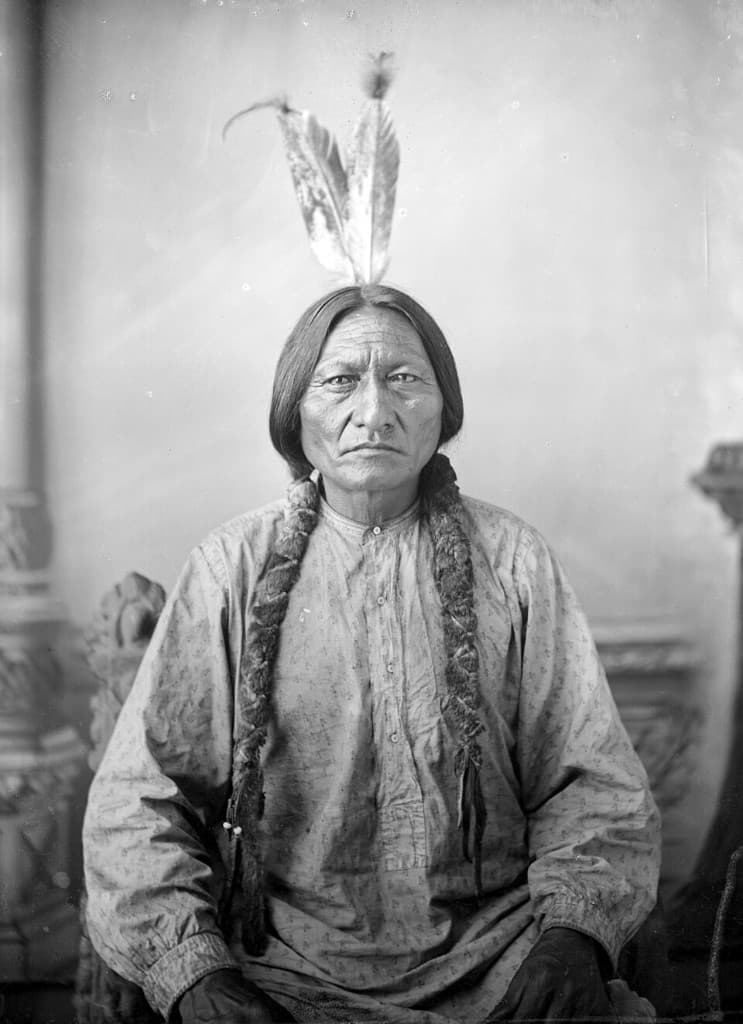
Sitting Bull (Tȟatȟáŋka Íyotake, c. 1831–1890) was a Hunkpapa Lakota holy man and leader who resisted U.S. government policies that threatened Lakota sovereignty, territory, and way of life. He is remembered for his spiritual leadership, courage, and commitment to his nation.
Early life and leadership
Born in what is now South Dakota, Sitting Bull gained respect as a warrior and spiritual leader among the Hunkpapa Lakota. He advocated for traditional ways of life and unity among Indigenous nations facing pressure from westward expansion.
Battle of the Little Bighorn
In 1876, Sitting Bull played a central spiritual role in the gathering of Lakota, Cheyenne, and Arapaho forces at the Battle of the Little Bighorn (Greasy Grass). Though he did not fight in the battle itself, his vision and leadership helped inspire the coalition's resistance.
Later years and legacy
After years of resistance, Sitting Bull surrendered in 1881. He later joined Buffalo Bill's Wild West Show to share Lakota culture with audiences. He was killed in 1890 during an attempt to arrest him amid fears surrounding the Ghost Dance movement. Today he is honored as a symbol of Indigenous resilience and sovereignty.
Learn More
Explore these external resources from museums, parks, and tribal nations.
- Sitting Bull - National Park Service ↗
Biography from Little Bighorn Battlefield National Monument
- Sitting Bull - Smithsonian ↗
National Museum of the American Indian resources
- Standing Rock Sioux Tribe ↗
Official website of the Standing Rock Sioux Tribe